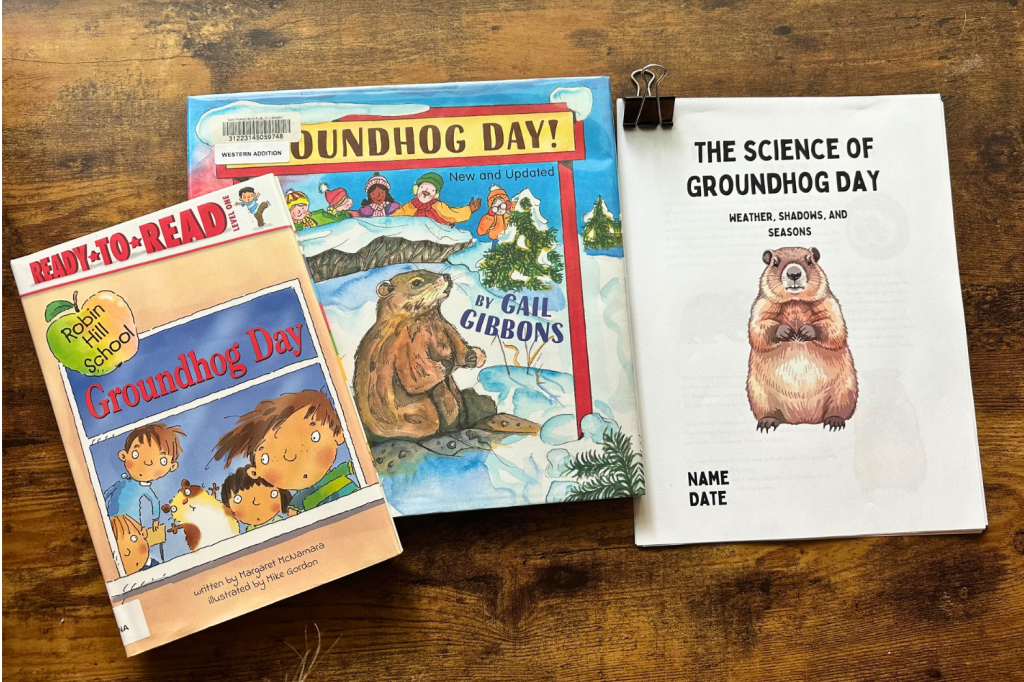
Happy Groundhog Day! Groundhog Day marks the midpoint between the winter solstice and the spring equinox.
The longer days have been a welcome shift for our family. Here in San Francisco, it almost feels warmer and sunnier now than it did last summer, though I am sure Karl the Fog will make his return once the land warms up and spring truly arrives.
How We Celebrate Groundhog Day
Every year, we read a book about Groundhog Day, make our own shadow predictions, and do a drawing tutorial or simple craft. One of our favorite activities is tracing our shadows outside. The sun is almost always out during the winter in California, which makes this an easy and fun tradition.
This year, I am excited to incorporate a short Groundhog Day science lesson focused on weather, seasons, and climate. I am using a standalone worksheet I created for my Etsy shop, but below I have listed the topics I cover so you can easily incorporate these ideas into your own Groundhog Day lesson.
My Kids’ Favorite Groundhog Day Books
Some links in this post are affiliate links. This means I may earn a small commission if you choose to make a purchase through them, at no extra cost to you. I only recommend resources we personally use and love.
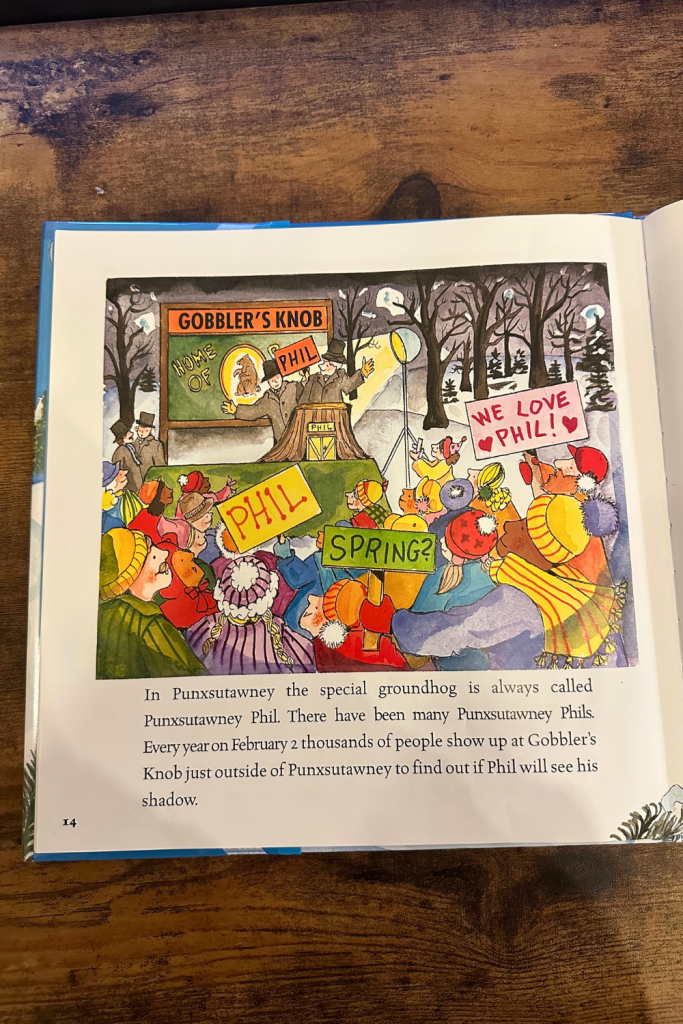
- Groundhog Day by Gail Gibbons
This book explains the origins of the holiday and introduces groundhog hibernation. I love Gail Gibbons’ illustrations and her simple but informative writing style. It is a family favorite and one I highly recommend purchasing or borrowing from the library. - Groundhog Weather School
The illustration style is not my favorite, but my kids love this book. It is packed with interesting facts about groundhogs, weather, and climate, which makes it worth including in our Groundhog Day read aloud. - Groundhog Day (Robin Hill School) by Margaret McNamara
This story follows a first grade class learning about Groundhog Day. It is a sweet and nostalgic early reader that still manages to provide plenty of factual information about the holiday.
A Science Themed Groundhog Day Lesson
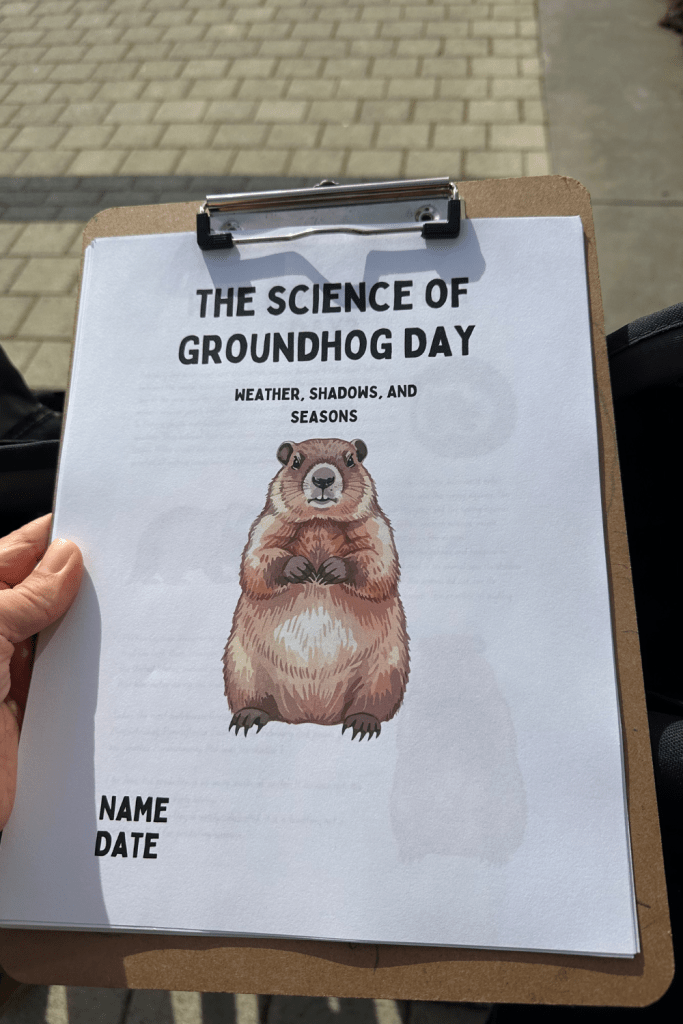
This year, our Groundhog Day lesson has a clear science focus. We will still talk about the tradition behind Punxsutawney Phil, but we will also explore the science behind seasons, shadows, and weather using a worksheet I created to guide our discussion.
Six Science Themed Topics for Groundhog Day
Science was my favorite subject growing up, and I love sharing that enthusiasm with my kids. I created a standalone mini unit study called The Science of Groundhog Day, which covers most of the topics below.
You can follow along by using the unit study or by creating your own lesson using the ideas and resources listed here.
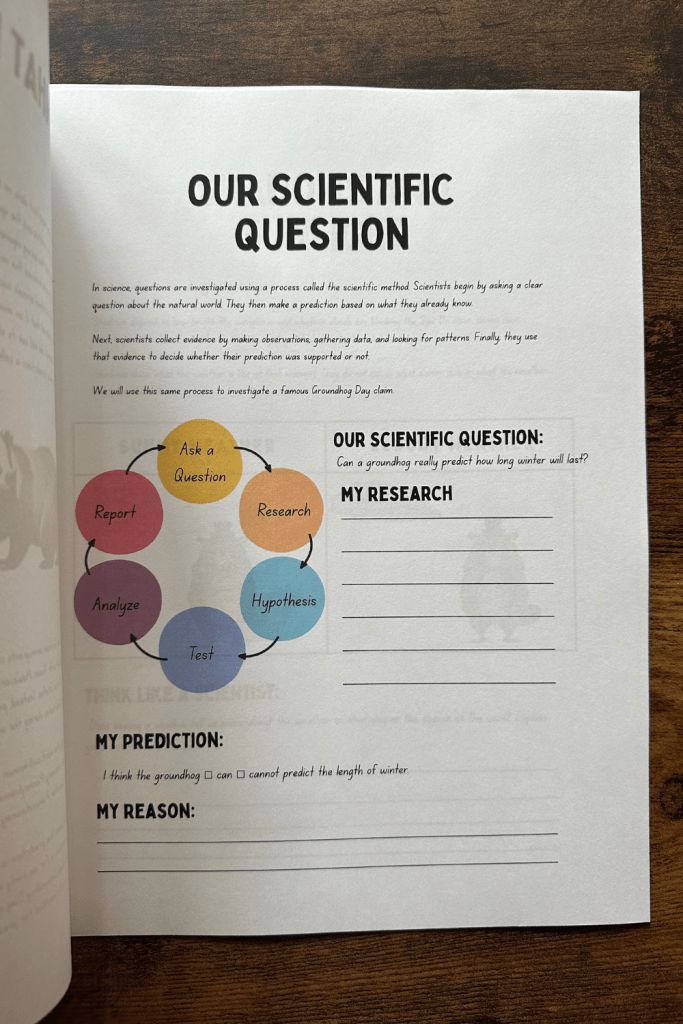
1. What Is the Scientific Method?
Groundhog Day is a fun way to introduce scientific questions, predictions, and observations. It provides a natural opportunity to review or introduce the steps of the scientific method.
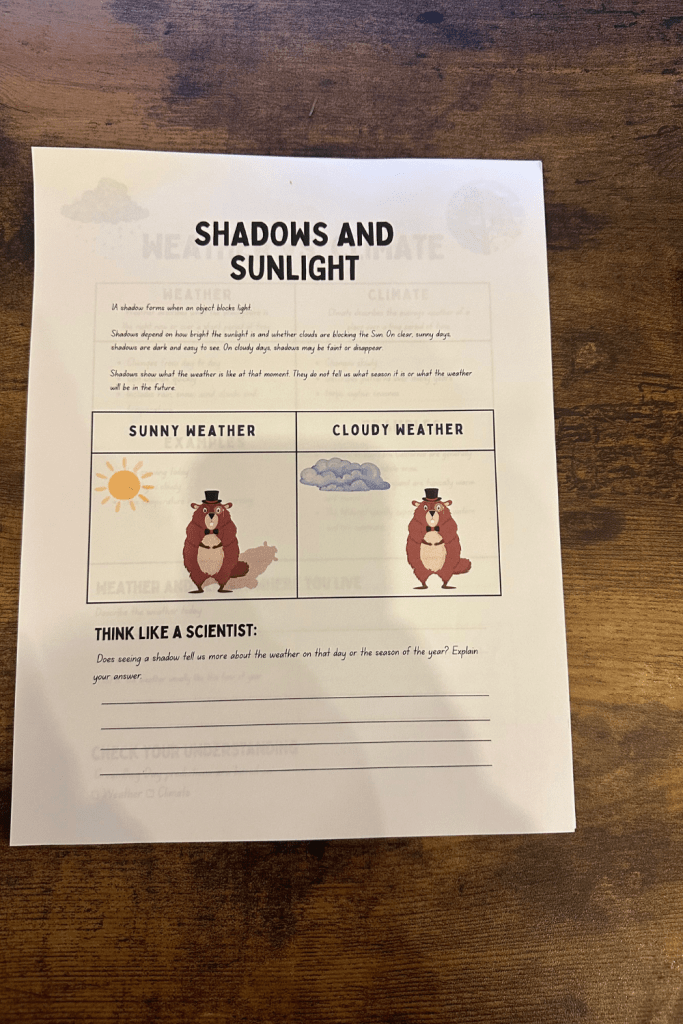
2. Why Are There Shadows?
Shadows form when light is blocked by an object. Making shadow predictions on Groundhog Day is a perfect hands on way to explore this concept. You can learn more about shadows by watching this video.
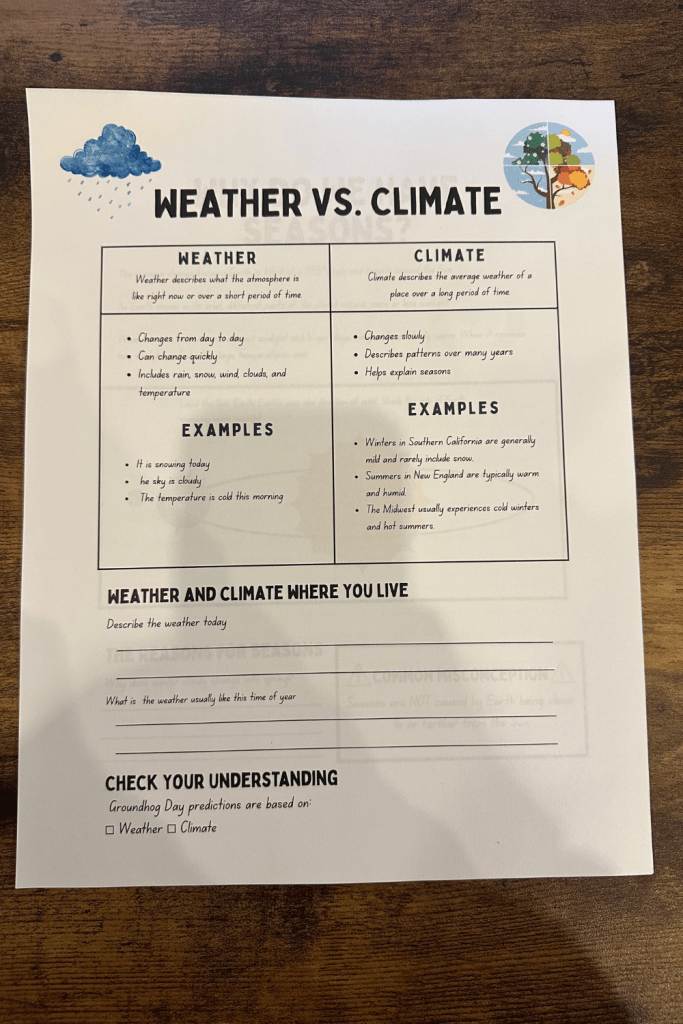
3. Weather vs Climate Weather refers to short term atmospheric conditions, while climate describes long term patterns. This distinction helps explain why a single day or a single groundhog cannot accurately predict an entire season. Learn more here.
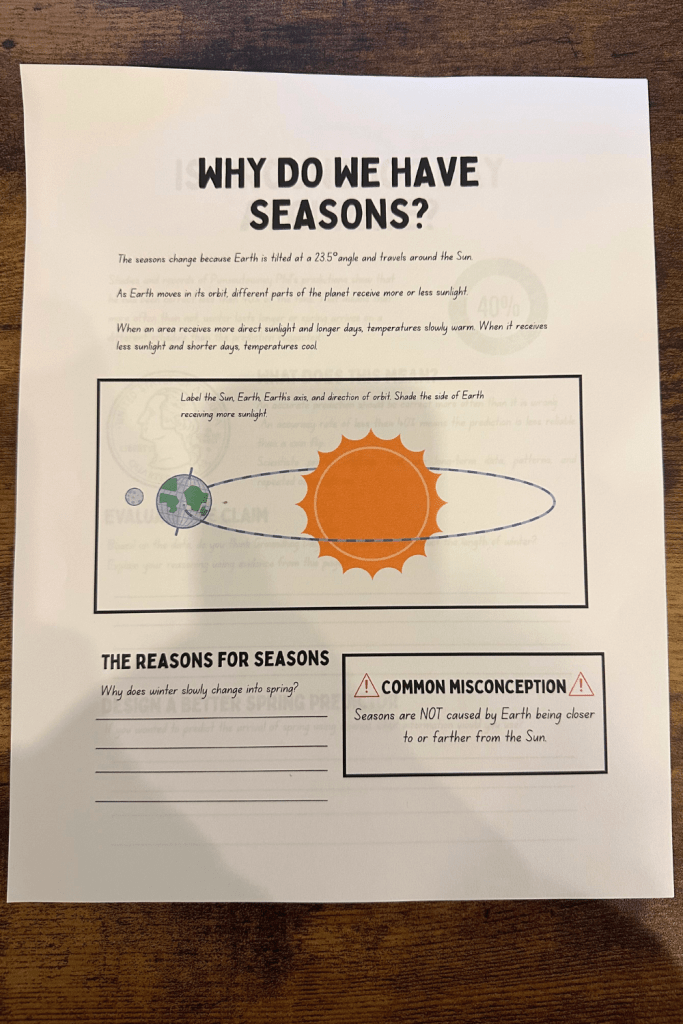
4. The Science of Seasons The seasons are caused by the tilt of Earth’s axis rather than our distance from the sun. If you are looking for a companion book, I highly recommend The Reasons for Seasons by Gail Gibbons.
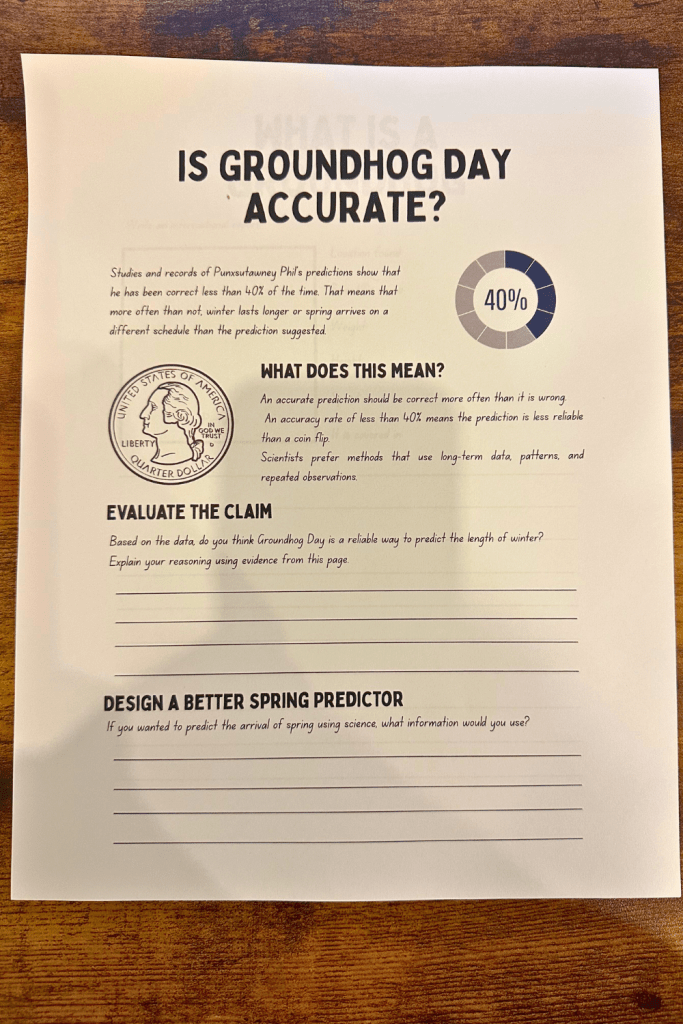
5. Is Groundhog Day Accurate
According to the National Oceanic and Atmospheric Administration, Punxsutawney Phil’s predictions are accurate about 35 percent of the time. This makes a great starting point for discussions about data, probability, and scientific reliability.
6. Hibernation
Groundhog Day is an excellent opportunity to discuss hibernation with kids. This topic is not included in my mini unit study this year, but it makes a meaningful extension to the lesson.
You can learn more about hibernation here.
Follow Along for More Seasonal Science
If you enjoy simple, science rich lessons tied to seasons, holidays, and everyday curiosity, I would love for you to follow along here on the blog. I regularly share hands on activities, book recommendations, and low prep science lessons designed for homeschool families and curious kids.
Subscribe or bookmark this page to stay up to date with new seasonal science posts throughout the year.
Science Themed Posts You May Enjoy

 Seven Founding Hills
Leave a comment