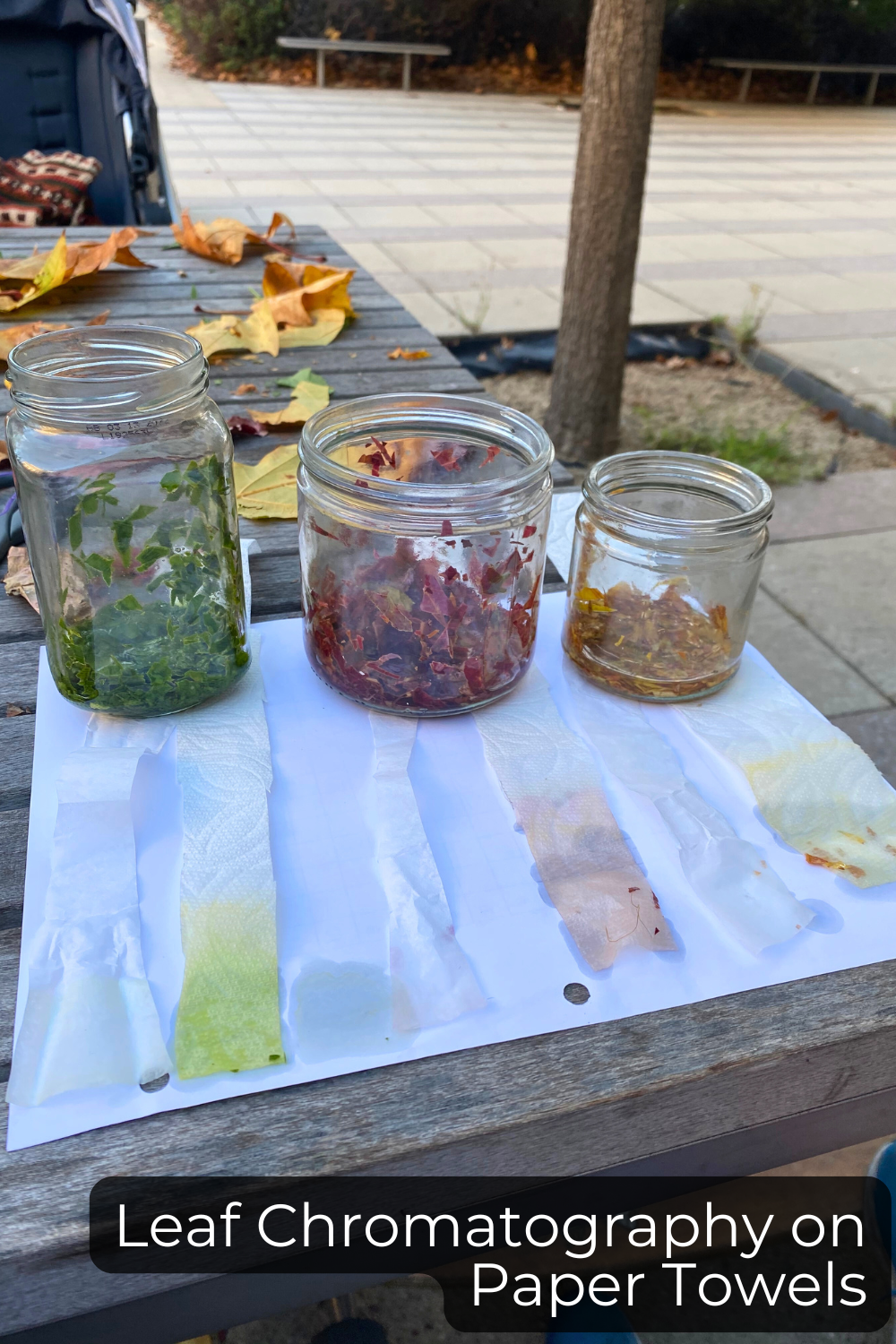
It is finally starting to look like fall in San Francisco! The West Coast may not be famous for its autumn colors, but you can definitely spot some beautiful golden and fiery hues around the city—especially in the ginkgos planted in urban spaces and throughout our parks.
Every year, when the leaves finally begin to change (usually late November or early December), our homeschool family kicks off a favorite tradition: a leaf chromatography lab.
This simple, colorful, hands-on experiment captures my kids’ curiosity immediately and opens the door to rich conversations about seasons, adaptation, plant anatomy, and photosynthesis.
What Is Chromatography?
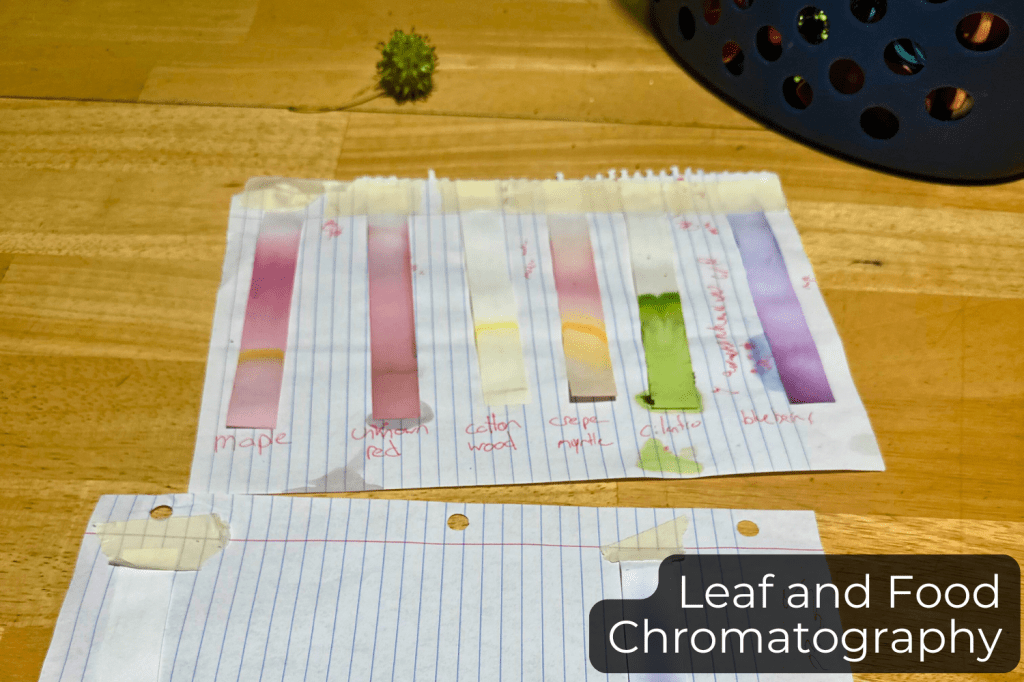
Chromatography is a method scientists use to separate mixtures. In this lab, the “mixture” is the blend of pigments inside a leaf. Even if a leaf looks like just one color, it’s actually made of many different pigments that each move differently when carried by a solvent (in our case, isopropyl alcohol!).
As the alcohol travels up the paper, it pulls the pigments with it, separating them into bands of color. This creates a visual “map” of the pigments found in each leaf.
Why Do Leaves Change Color in the Fall?

During spring and summer, leaves are full of chlorophyll, the pigment that makes them green and helps plants absorb sunlight for photosynthesis. As days shorten and temperatures cool, trees slow down food production. Chlorophyll breaks down, revealing the other pigments that were there all along.
Common leaf pigments include:
- Chlorophyll (green)
- Carotenoids (yellow and orange)
- Anthocyanins (reds and purples)—often produced more strongly in cool fall weather
- Tannins (browns)
Chromatography lets kids see all these pigments—even ones their eyes can’t detect in the leaf!
Where Do We Find Leaves in San Francisco?

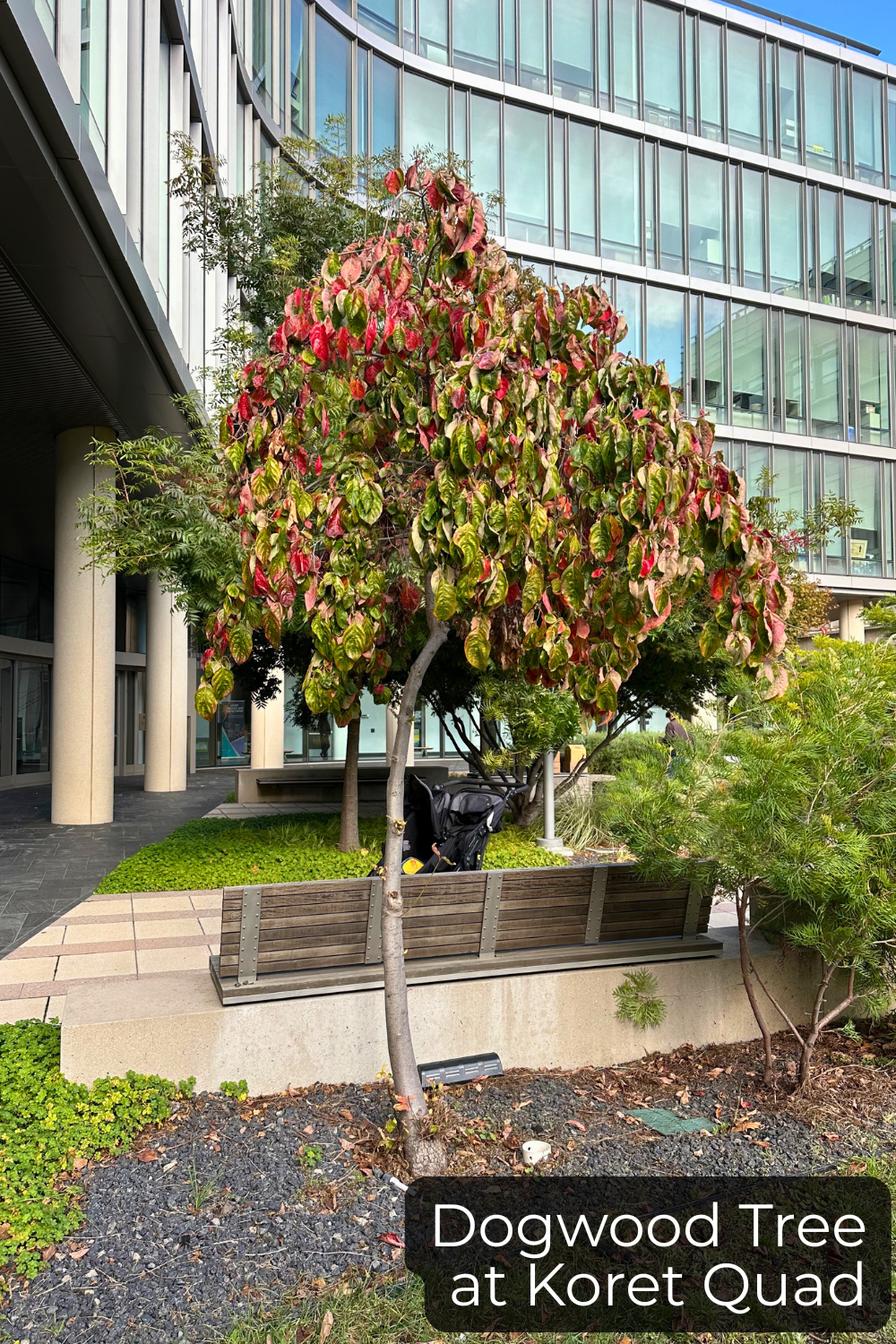
San Francisco is known for its Monterey cypresses, fragrant eucalyptus groves, and iconic redwoods, but you might be surprised by how many deciduous trees are tucked into the landscape.
Some of our favorite places to find fall color include:
- UCSF Mission Bay Campus — a hidden treasure trove of ginkgos and maples
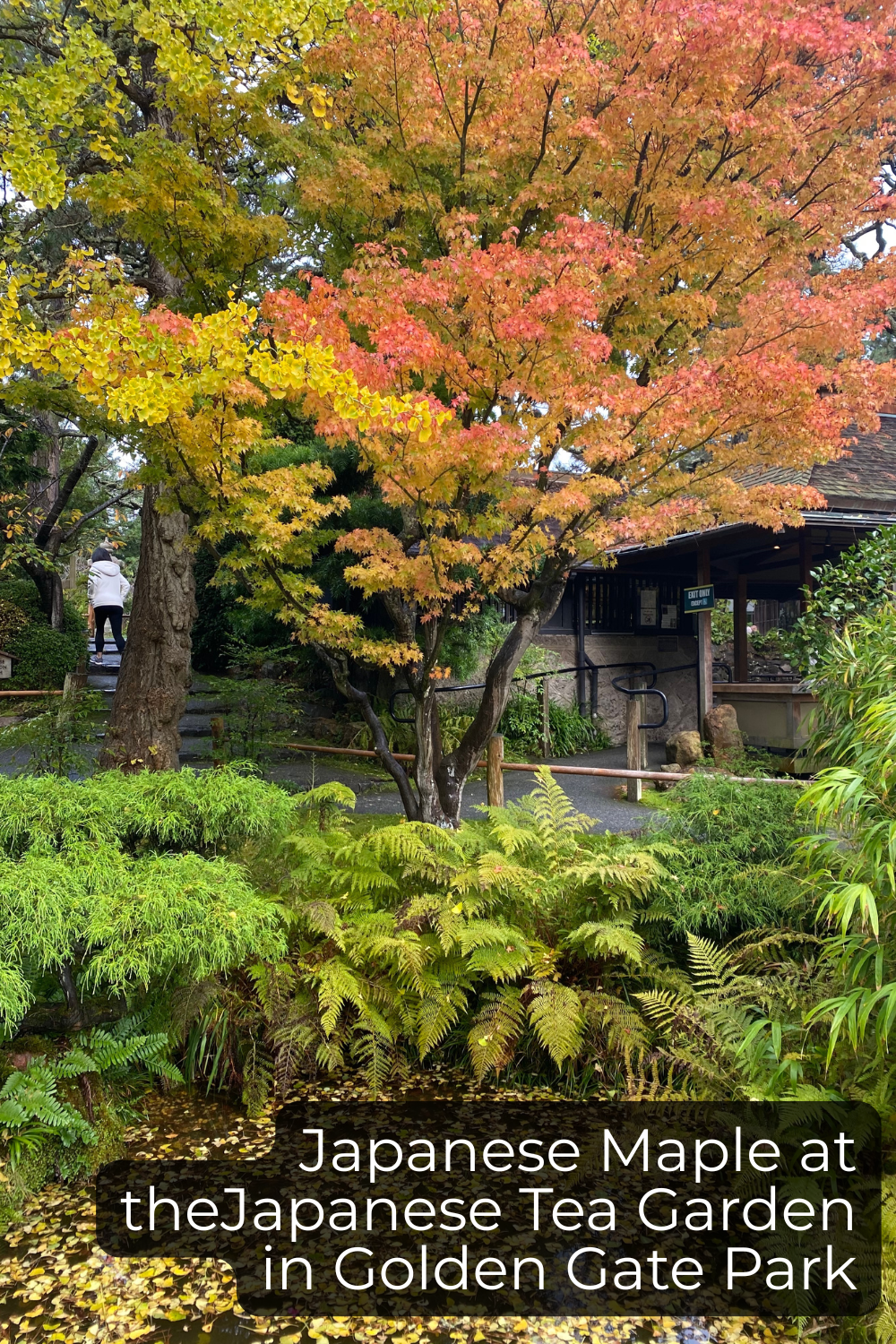
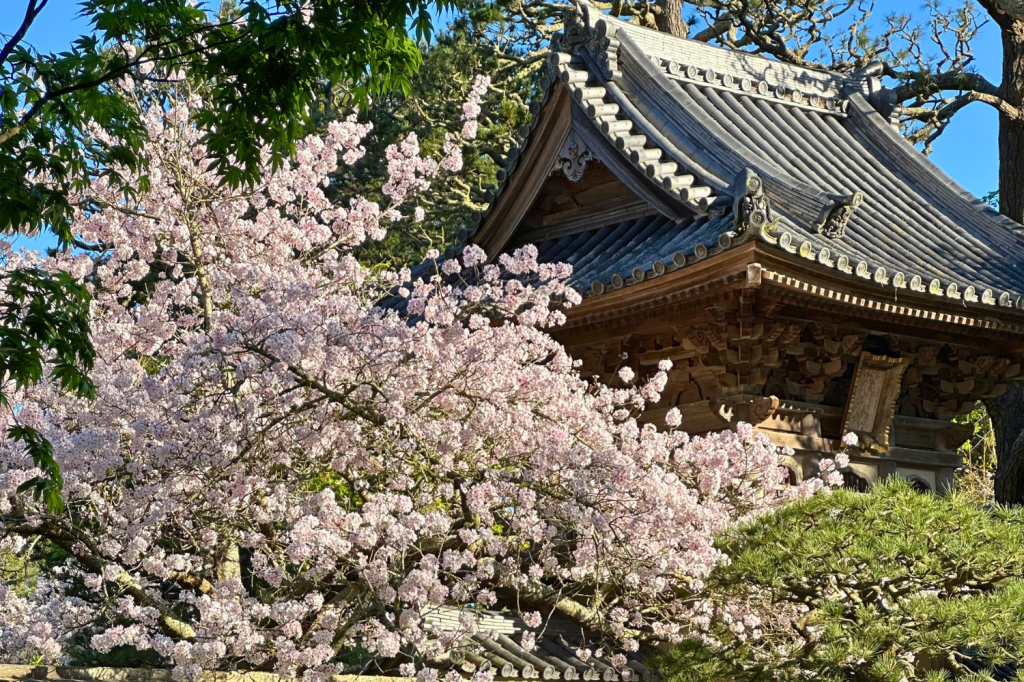
- Golden Gate Park’s Japanese Tea Garden — stunning seasonal maples and fall textures
- JFK Promenade in Golden Gate Park — scattered deciduous trees with reliable leaf litter
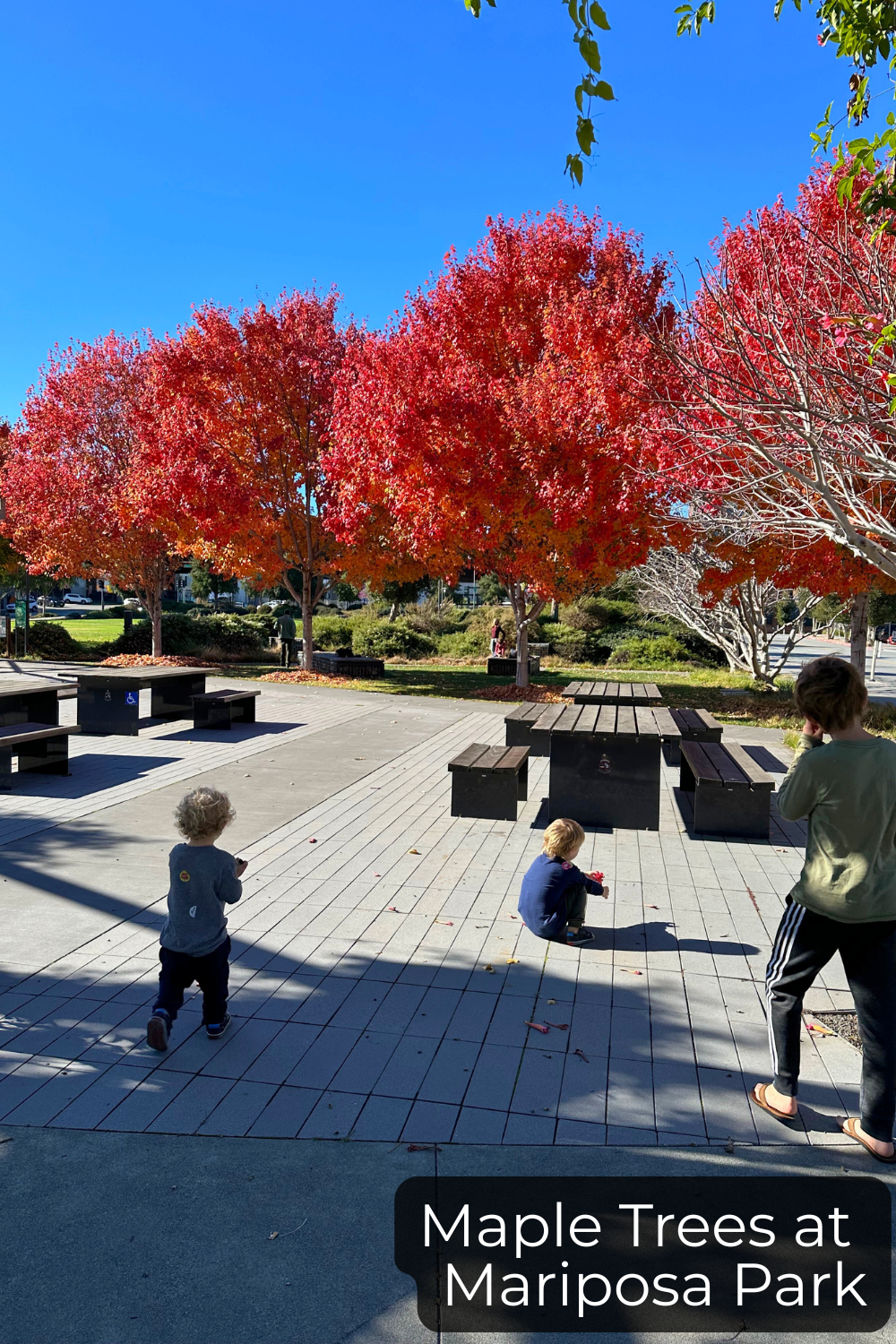
This year we collected our leaves in Mission Bay.
In front of the Sandler Building near Koret Quad, we found Japanese maples, dogwood, and ginkgos. By the Mission Bay hospital, we spotted even more ginkgos and maple trees transitioning from rich green to brilliant reds.
Leaf Chromatography: Step-by-Step Photo Instructions
Here is the simplified step-by-step picture tutorial
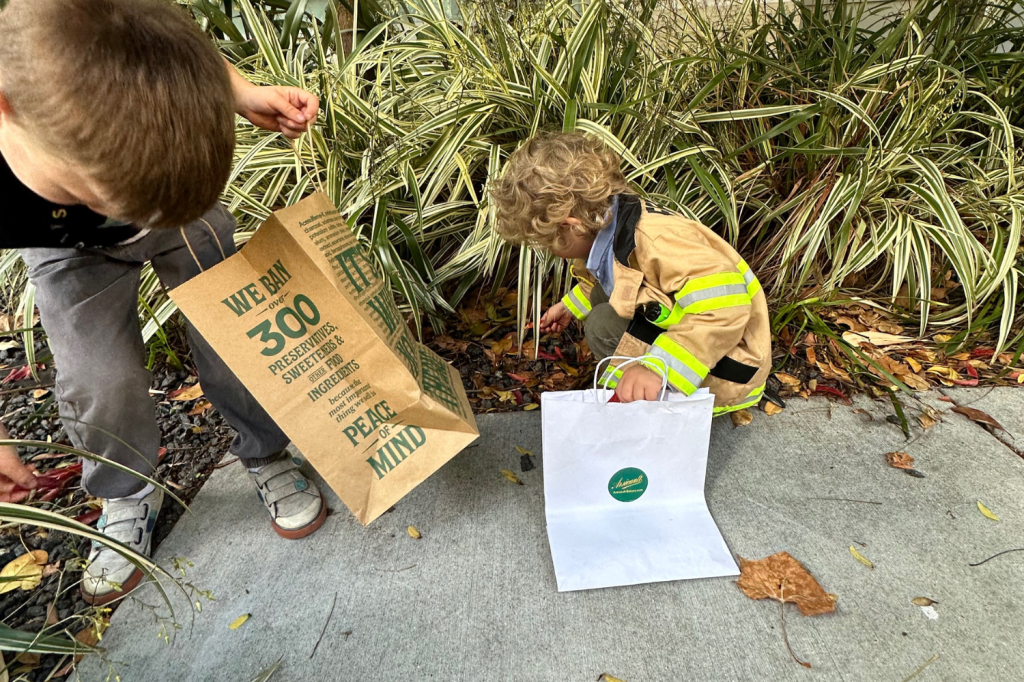
1. Collect leaves in a variety of colors and types.
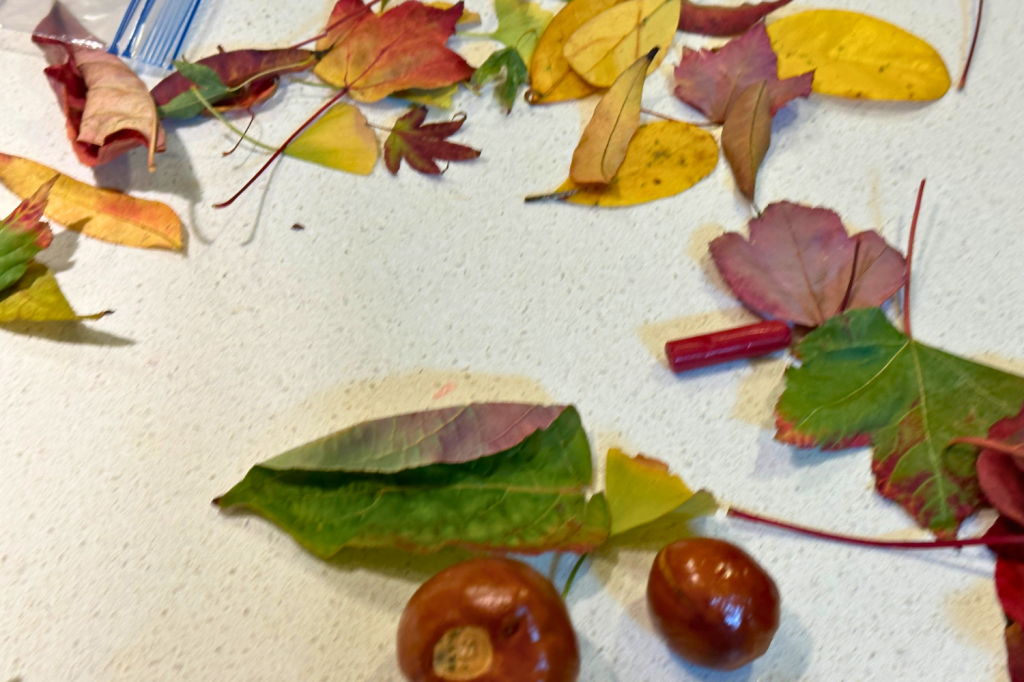
2. Sort leaves by type or color.

3. Cut and smash leaves into small pieces and to release pigment
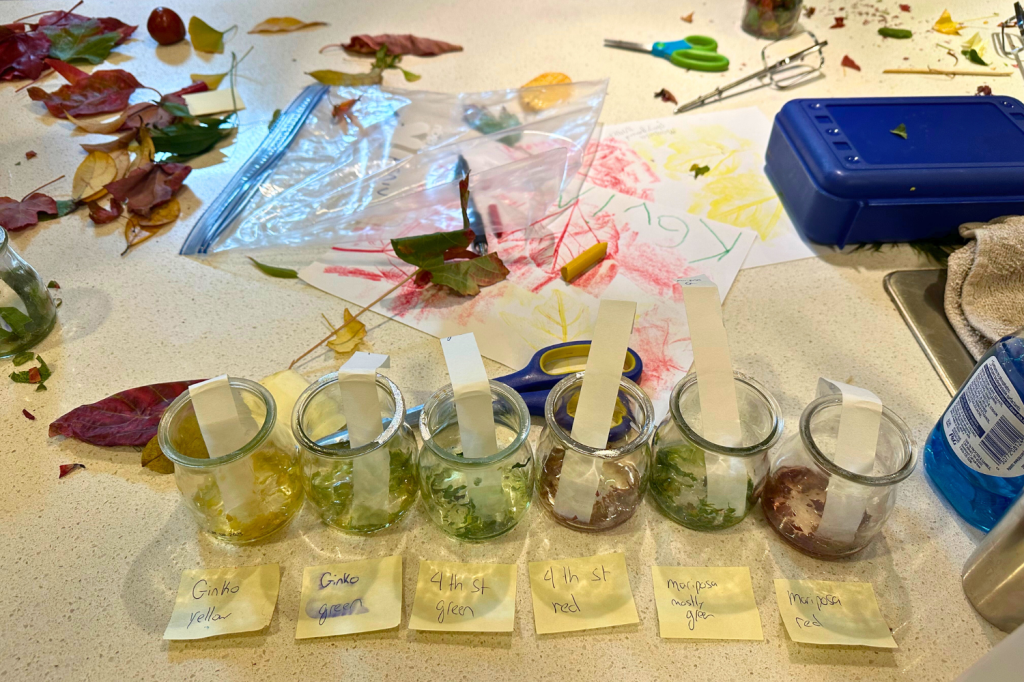
4. Add isopropyl alcohol * to cover the leaf bits and let them sit for at least 10 minutes so the pigments dissolve.
CAUTION: Alcohol is flammable and poisonous—use with adult supervision only.
5. Place a labeled strip of chromatography paper or a paper towel into the solution.
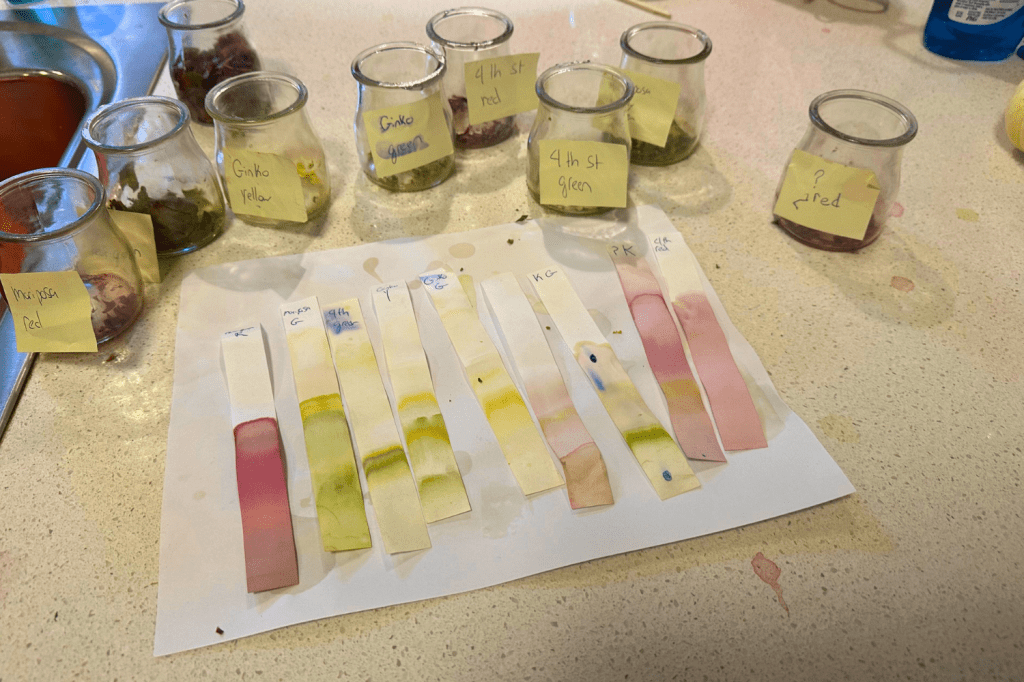
Let the pigment travel up the paper for at least an hour.
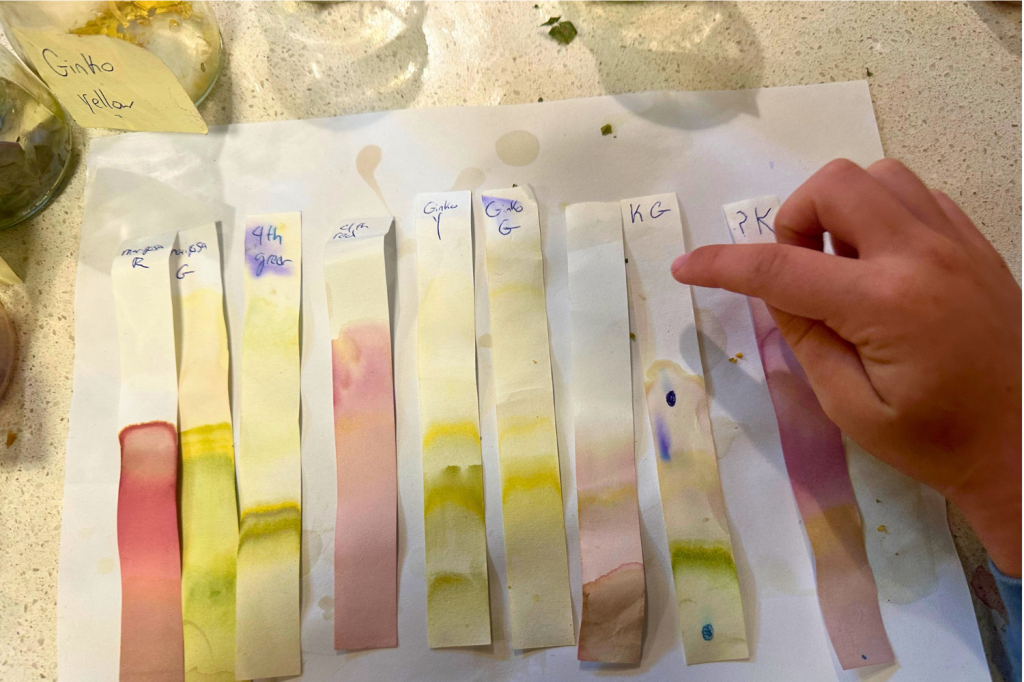
Remove and let dry, then observe the different pigment bands.
Full Leaf Chromatography Lab Instructions
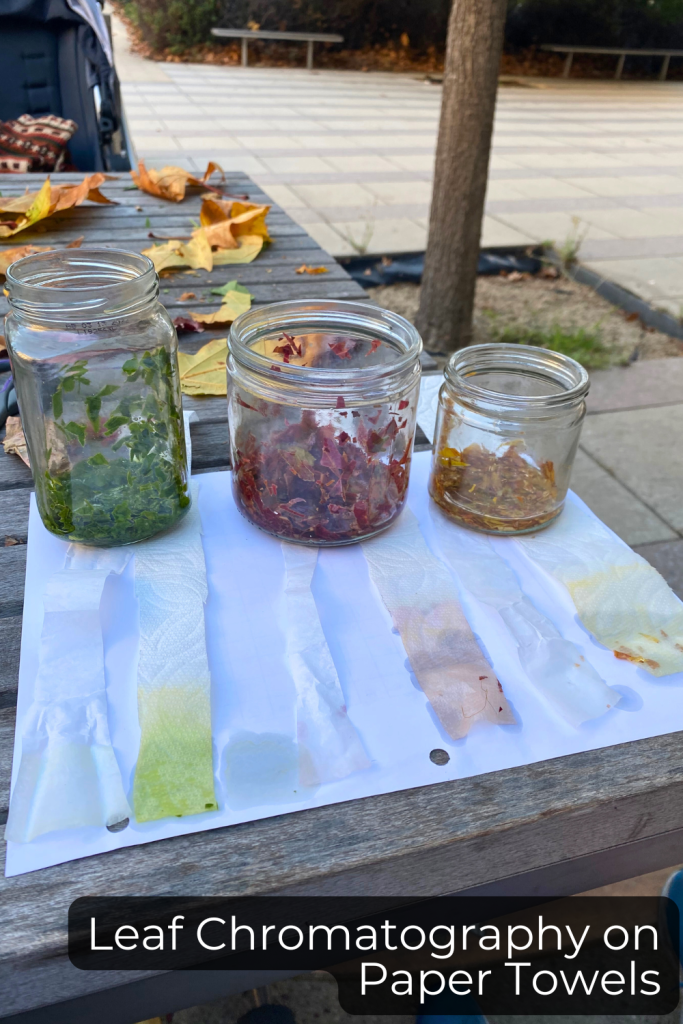
Materials
- Fresh fall leaves
- Scissors or small knife
- Spoon or mortar and pestle
- Isopropyl alcohol (70–91%)
- Small jars or cups
- Chromatography paper or paper towel strips
- Tape and labels
Procedure
- Collect a variety of leaves.
- Sort them into groups by type or color.
- Cut or tear the leaves into small pieces.
- Smash the pieces to release the pigments.
- Cover with isopropyl alcohol and allow to sit for 10+ minutes.
- Tape a strip of chromatography paper to the inside of the cup so the bottom of the paper touches the alcohol without fully submerging it.
- Leave the setup in a well-ventilated place for at least an hour.
- Once the colors rise up the paper, remove and allow to dry.
- Compare the pigment patterns—what colors do you see? Do different leaves show different pigments?
Conclusion
I hope this lab inspires you and your kids to explore why leaves change color and to enjoy the subtle beauty of fall in San Francisco.
If you try this experiment, I’d love to hear where your favorite fall-color spots are—whether here in the Bay Area or wherever you live!
I am working on a fall leaf mini unit study and lab worksheet. I will link the resources when they are done.

 Seven Founding Hills
Leave a comment